



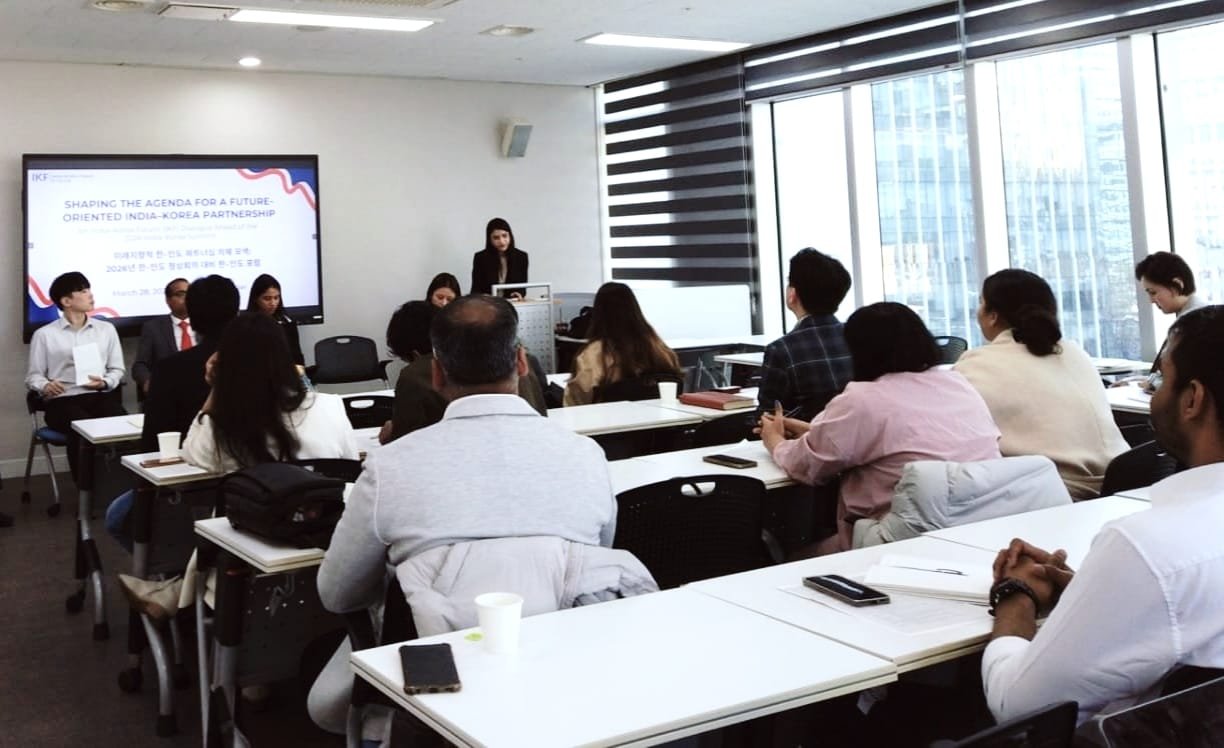
At the India–Korea Forum 2026 in Seoul, Ibtsam Qureshi, a PhD candidate at Hankuk University of Foreign Studies, delivered a timely and insightful analysis of the evolving economic partnership between India and Korea. Her presentation traced the trajectory from the implementation of the India–Korea CEPA to emerging opportunities in electric vehicles (EVs) and advanced manufacturing.
Since its implementation in 2010, the India–Korea CEPA has served as a cornerstone of bilateral economic cooperation. Nowhere is its impact more visible than in the automobile sector, where trade liberalization, investment, and industrial growth intersect.
Tariff reductions under CEPA—particularly the sharp decline in duties on auto parts—enabled Indian manufacturers to access advanced Korean components at lower costs. At the same time, Korean firms such as Hyundai and Kia expanded their production footprint in India, transforming the country into a major automotive manufacturing and export hub.
However, as Qureshi highlighted, the outcomes of CEPA have not been uniformly positive. While large firms have significantly benefited, many small and medium-sized enterprises (SMEs) in India have struggled to compete with imported components and to fully utilize CEPA provisions. Moreover, structural asymmetries in market access and tariff concessions have contributed to persistent trade imbalances in the sector.
These lessons are particularly relevant as both countries enter a new phase of industrial transformation driven by electrification and green technologies. India’s EV market is expanding rapidly under strong policy support, while Korea possesses advanced capabilities in batteries, materials, and automotive electronics.
Looking ahead, Qureshi emphasized the need to transition from a fragmented trade and investment model to a strategically designed value-chain partnership. This requires a coordinated approach in three key areas.
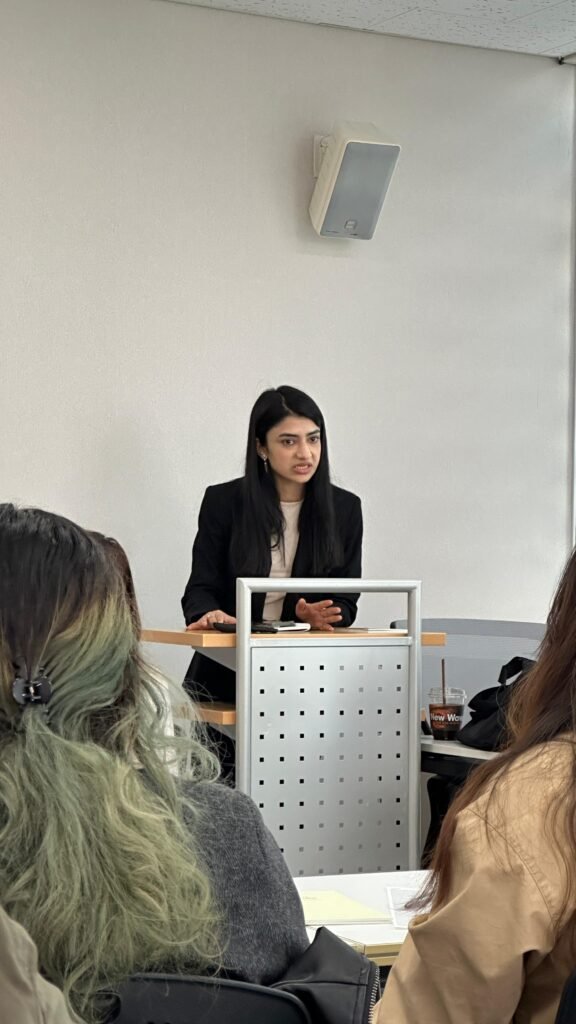
First, both countries must identify and align key segments of the EV value chain—including batteries, power electronics, and charging infrastructure—while strategically distributing production and co-development roles.
Second, trade agreements such as CEPA must be better integrated with domestic industrial policies. Aligning CEPA upgrades with initiatives like India’s Make in India and Production Linked Incentive (PLI) schemes can help foster joint manufacturing clusters, shared R&D ecosystems, and innovation partnerships.
Third, greater emphasis must be placed on SME participation. Simplifying rules of origin, improving customs procedures, and supporting capacity-building will be essential to ensure inclusive and sustainable value-chain development.
Ultimately, her presentation underscored a broader strategic shift. The future of India–Korea economic relations will depend not only on trade volumes, but on the ability of both countries to act as co-producers and co-innovators in emerging technologies.
As global competition intensifies in EVs and advanced manufacturing, the India–Korea partnership has the potential to evolve into a model of next-generation industrial cooperation—if it successfully internalizes the lessons of the past and strategically aligns for the future.