



By Bagmita Borthakur
June 24, 2026
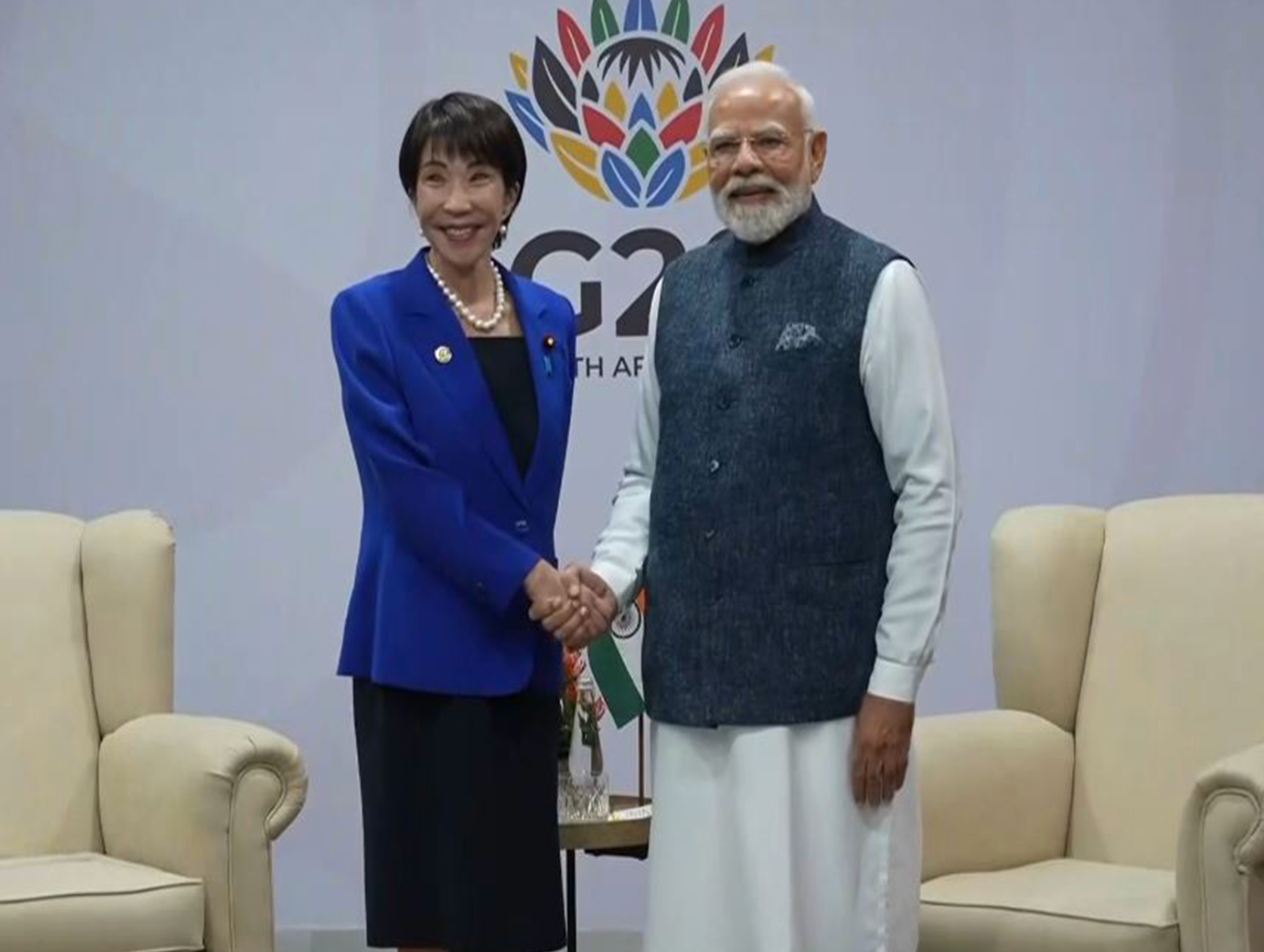
Japan’s Prime Minister Sanae Takaichi prepares for her first visit to India after assuming office, for the annual India-Japan Summit in New Delhi. The key points of discussions are expected to focus on economic security, resilient supply chains, critical technologies and the future of the Indo-Pacific. However, a significant development of this visit is Japan’s proactive engagement with Northeast India.
Over the past decade, Japan has acknowledged the Northeast as the point of convergence for India’s Act East Policy and Japan’s Free and Open Indo-Pacific (FOIP) vision. Japan’s engagement with the region has been based on a connectivity-driven approach, positioning Northeast India within the larger Indo-Pacific architecture. This approach was institutionalised with the establishment of the India-Japan Act East Forum in 2017, the first bilateral forum dedicated to the Northeast.
Over the years, Japan has become the largest development partners in Northeast India. Through the Japan International Cooperation Agency (JICA), Tokyo has supported major infrastructure projects, including the North East Road Network Connectivity Improvement Project, signed in 2017. The Aizawl-Tuipang road in Mizoram, the Dhubri-Phulbari bridge connecting Assam and Meghalaya, and highway projects in Tripura signify Japan’s development footprint in the region. While these investments were aimed at addressing developmental gaps within the Northeast, they become strategic when understood as a part of a larger cross-border connectivity corridor in India’s eastern neighbourhood.
The Dhubri-Phulbari bridge is not merely a bridge between Assam and Meghalaya. It strengthens connectivity in a region that borders Bangladesh. Road projects in Tripura are gaining importance due to their proximity to Bangladesh’s transport networks and the Chattogram Port. Similarly, in Mizoram, they are aimed at improving connectivity with Myanmar and Southeast Asia. Taken together, these projects indicate Japan’s strategic footprint within the Northeast. However, while connectivity remains central to Japan’s engagement in the region, recent policy documents trace a significant shift in how these corridors are understood.
Japan’s development cooperation framework for Bangladesh and the Bay of Bengal region increasingly emphasises fostering growth by treating Northeast India, Bangladesh, and the surrounding areas as a single economic sphere. The objective is to build industrial value chains linking the Bay of Bengal with Northeast India, with what Japan identifies as multi-layered connectivity.
The integration of Northeast India into Japan’s Bay of Bengal vision highlights that the focus is no longer limited to building corridors, but on how these corridors can enable trade, improve supply chains and connectivity across markets in the Bay of Bengal region.
Bangladesh has emerged as one of the fastest-growing economies in South Asia and remains a major recipient of Japanese overseas development assistance (ODA). Japan’s Bay of Bengal Industrial Growth Belt (BIG-B) initiative has already supported large-scale projects, including the Matarbari Deep Sea Port, transport infrastructure and economic zones in Bangladesh. These investments aim to improve connectivity and support economic growth across the Bay of Bengal. In this context, the next phase of India-Japan engagement in the Northeast becomes significant.
The 2025 India-Japan Annual Summit Joint Statement places significant emphasis on economic security, supply chain resilience, critical minerals, semiconductors, technology cooperation, mobility and state-level partnerships. The statement reflects a partnership that is looking beyond infrastructure and towards economic integration. Thus, Japan is no longer looking at Northeast India in isolation. Increasingly, it is viewing Northeast India, Bangladesh and the Bay of Bengal as an interconnected economic space.
This shift has important implications for the future of India-Japan relations. The next phase of India-Japan cooperation in the Northeast is likely to focus less on creating new connectivity corridors and more on making existing ones functional.
It is in this context that Prime Minister Sanae Takaichi’s first visit to India is significant for the Northeast. This visit offers an opportunity to reflect on the past decade of India-Japan convergence in the Northeast, while also laying the groundwork for what comes next.
Prime Minister Shinzo Abe was expected to visit Guwahati for the India-Japan Annual Summit, reflecting Japan’s growing interest in Northeast India. Six years later, Takaichi’s visit highlights that this interest has continued across successive Japanese governments.
However, even though Japan’s engagement remained consistent with the Northeast, the nature has shifted. Under Prime Minister Abe, the focus was on overcoming decades of infrastructure deficits. Today, Northeast India is viewed as part of a larger economic network under the Indo-Pacific architecture.
Prime Minister Takaichi’s visit reflects both continuity and change in India’s partnership with Japan. It reflects the enduring legacy of Abe’s vision, which first positioned Northeast India at the centre of this convergence. At the same time, it initiates a new phase in which the region is valued not only for its strategic significance but also for its economic potential. For Northeast India, this represents a shift from being identified as a gateway to becoming a stakeholder in the India-Japan partnership.
It points towards a new phase in which the region is valued not only for its strategic location but also for its economic potential. For Northeast India, this represents a gradual shift from being viewed as a gateway to becoming a stakeholder in a wider regional economy. Thus, between Tokyo and New Delhi, if the last decade was about building connectivity, the next decade will be about operationalising it with the India-Japan Summit 2026.
About the Author
Bagmita Borthakur is a 2026 IKF Spring Fellow at the India–Korea Forum (IKF). She is a Ph.D. Research Scholar in International Relations at BITS Pilani, India.
References
ANI. “Japan PM Takaichi Visit Likely to be Held in New Delhi in July.” ANI News, June 23, 2026, accessed on June 24, 2026. https://www.aninews.in/news/world/asia/japan-pm-takaichi-visit-likely-to-be-held-in-new-delhi-in-july20260623133838/
Asian Confluence. “Japan’s Northeast India Gambit: Development Meets Geopolitics.” Asian Confluence, accessed on June 24, 2026. https://www.asianconfluence.org/publication-details-full/japan-s-northeast-india-gambit-development-meets-geopolitics
Basu, Pratnashree. “Japan in India’s Northeast: Infrastructure, Innovation, Impact.” Observer Research Foundation (ORF), accessed on June 24, 2026. https://www.orfonline.org/expert-speak/japan-in-india-s-northeast-infrastructure-innovation-impact
Embassy of Japan in India. India-Japan Act East Forum: Cooperation for Development of India’s Northeast Region. Embassy of Japan in India, 2022, accessed on June 24, 2026. https://www.in.emb-japan.go.jp/files/100319132.pdf
Japan International Cooperation Agency (JICA). JICA India: Partnering for Sustainable Development, FY2025–FY2026. JICA India Office, 2026, accessed on June 24, 2026. https://www.jica.go.jp/english/overseas/india/activities/__icsFiles/afieldfile/2026/04/09/JICA_Brochure_FY2025-FY2026.pdf
Ministry of External Affairs. India-Japan Joint Statement: India-Japan Joint Vision for the Next Decade. Government of India, August 30, 2025, accessed on June 24, 2026. https://www.mea.gov.in/bilateral-documents?dtl/40062
Ministry of Foreign Affairs of Japan. White Paper on Development Cooperation 2024. Government of Japan, 2024, accessed on June 24, 2026. https://www.mofa.go.jp/policy/oda/white/2024/html/honbun/b4/s2.html
Suzuki, Satoshi. Japan’s Free and Open Indo-Pacific and Northeast India. Embassy of Japan in India, 2021, accessed on June 24, 2026. https://www.in.emb-japan.go.jp/files/100149566.pdf.
The Hindu. “India-Japan Guwahati Summit Cancelled.” The Hindu, December 11, 2019, accessed on June 24, 2026. https://www.thehindu.com/news/international/india-japan-guwahati-summit-cancelled/article61607607.ece.