



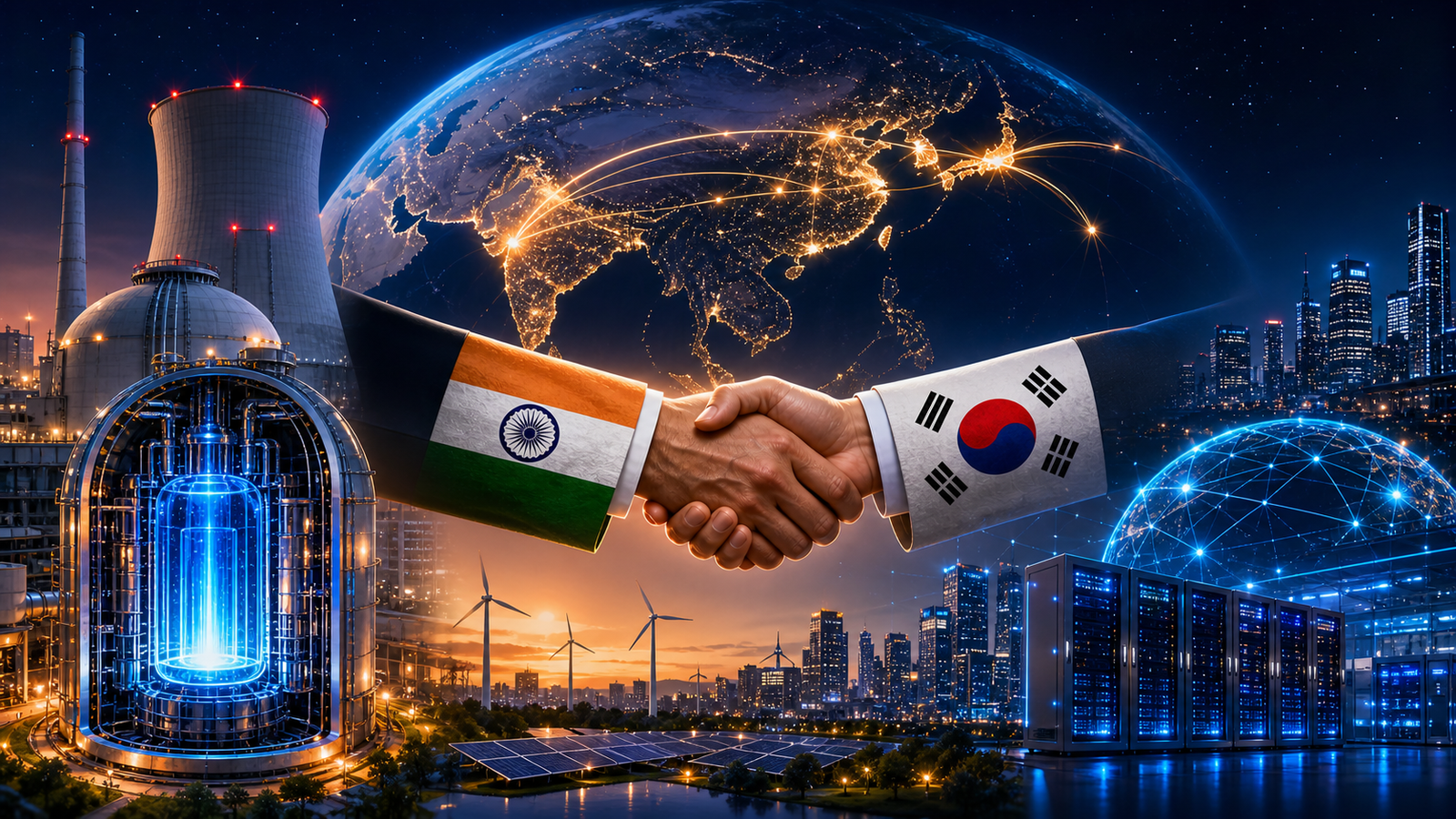
India has recently achieved a quiet yet highly significant strategic milestone in the civilian nuclear sector. Prime Minister Narendra Modi officially announced that the 500 MW Prototype Fast Breeder Reactor (PFBR), located in Kalpakkam in the southern state of Tamil Nadu, reached criticality on April 6, 2026. The reactor was constructed by Bharatiya Nabhikiya Vidyut Nigam Limited (BHAVINI), a state-owned enterprise under India’s Department of Atomic Energy.
This development represents far more than the commissioning of another nuclear reactor. It marks the substantive beginning of the second stage of India’s long-envisioned three-stage nuclear energy strategy and carries the potential to fundamentally reshape India’s position in the global energy order.
To begin with, “criticality” refers to the state in which a reactor can sustain a nuclear fission chain reaction independently, without external intervention. In simple terms, it means the reactor has reached the stage of self-sustained operation. However, the real significance of this achievement lies in the fact that the reactor is a fast breeder reactor (FBR). Unlike conventional reactors that simply consume nuclear fuel, FBRs have the unique capability to produce more fuel than they consume. In other words, they generate energy while simultaneously creating future fuel resources.
This characteristic holds profound implications for energy security. Most countries today rely on uranium-based nuclear systems, but uranium resources are geographically concentrated and vulnerable to supply chain risks. India, by contrast, possesses relatively limited uranium reserves but holds approximately 25–30% of the world’s thorium resources. India’s nuclear strategy is designed around this structural reality. The first stage relies on uranium, the second stage uses fast breeder reactors to produce plutonium, and the third stage transitions to a thorium-based fuel cycle.
The PFBR reaching criticality marks the real operational beginning of this second stage. According to official sources, the reactor uses mixed uranium-plutonium oxide fuel and is designed to produce more fuel than it consumes. This lays the foundation for eventually harnessing India’s abundant thorium resources. In essence, India is not merely generating electricity—it is building a long-term system for indigenous nuclear fuel production.
What makes this achievement even more noteworthy is its rarity. Currently, Russia is the only country operating fast breeder reactors at a commercial scale, and India is now on the verge of joining this limited group. Major advanced economies—including the United States, the United Kingdom, France, and Japan—previously pursued FBR technologies but scaled back or discontinued them due to economic, safety, and political concerns. In this context, India’s progress demonstrates both technological persistence and strategic consistency.
This achievement is also closely linked to India’s pursuit of strategic autonomy. For decades, India faced constraints on access to nuclear technology within the global non-proliferation regime. Fast breeder technology, in particular, has been treated as highly sensitive due to its association with weapons-grade materials. Despite these limitations, India’s successful domestic development reflects a strong commitment to technological self-reliance.
From an energy transition perspective, this milestone is equally significant. India has set a target of achieving carbon neutrality by 2070, which will require large-scale, stable, and low-carbon energy sources. While renewable energy such as solar and wind is expanding rapidly, it suffers from inherent intermittency. Nuclear power, by contrast, can provide reliable baseload electricity. This stability becomes even more critical in the context of rapidly rising energy demand driven by data centers, artificial intelligence, and advanced manufacturing.
Above all, this development extends beyond energy policy and is deeply intertwined with India’s industrial strategy, technological capabilities, and geopolitical positioning. When combined with India’s plans for Small Modular Reactors (SMRs), it could position the country as a new player in the global nuclear energy market. The government has already announced plans to deploy five SMRs by 2033 and is building the institutional framework to encourage private sector participation.
There are important implications for South Korea as well. Korea is already a global leader in nuclear technology and is actively pursuing reactor exports and SMR development. However, India’s case demonstrates how technological development can be strategically aligned with national resource endowments and long-term state objectives. In particular, the thorium-based fuel cycle may emerge as a critical axis in future global energy competition.
At the same time, India’s expanding nuclear sector opens new avenues for India–Korea cooperation. India’s push for nuclear expansion and technological upgrading offers diverse opportunities for Korean companies and research institutions. Potential areas of collaboration include SMRs, reactor operations, safety systems, and supply chain development. Such cooperation could evolve beyond the energy sector into a broader technological and industrial partnership.
In conclusion, India’s achievement in bringing its fast breeder reactor to criticality represents more than a scientific milestone. It marks a pivotal turning point where energy security, technological self-reliance, and geopolitical strategy converge. As the global energy transition accelerates, India is quietly yet decisively reshaping the future of nuclear energy—creating new opportunities for deeper India–Korea cooperation in the process.
About the Author
Prof. Rajiv Kumar is the Director of the India–Korea Forum. He holds a Ph.D. in International Relations from Sungkyunkwan University, Seoul, South Korea. He has served as a Research Professor at the Institute of Indian Studies, Hankuk University of Foreign Studies; a Visiting Professor at the Academy of East Asian Studies, Sungkyunkwan University; and an Affiliated Scholar at the East–West Center (USA). He is also the Founding Managing Editor of the Journal of Indian and Asian Studies (World Scientific, Singapore).
This article was originally published in Korean in Aju Business Daily (아주경제). The accompanying visual illustration was generated with the assistance of ChatGPT.